Chest Infection vs Lung Infection – What’s the Difference?
Respiratory infections are becoming increasingly common due to pollution, smoking, weak immunity, and changing weather conditions. Many people often confuse chest infections with lung infections because both affect breathing and share similar symptoms. However, understanding the difference between the two conditions is important for timely diagnosis and proper treatment.
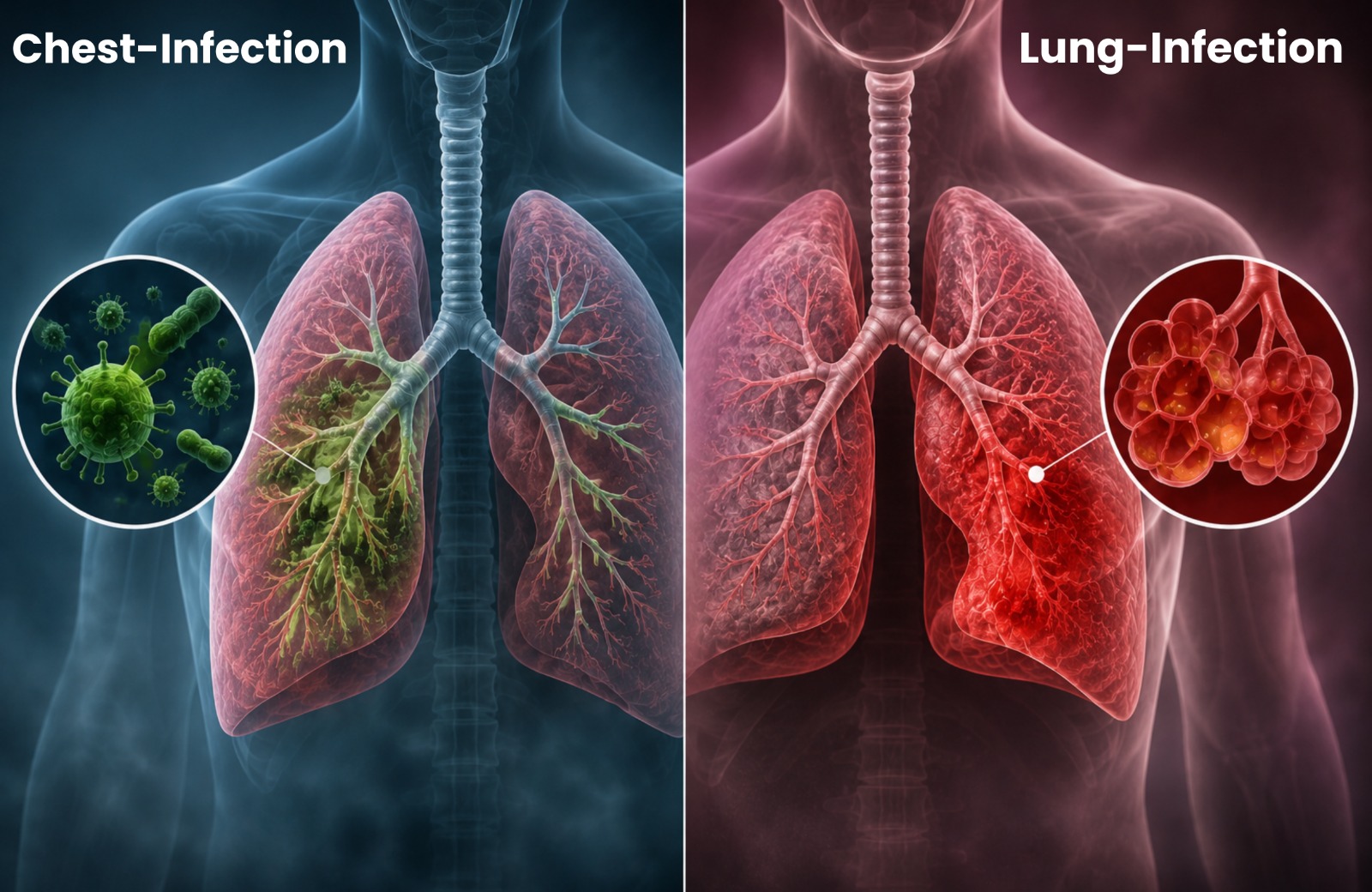
What is a Chest Infection?
A chest infection is a broad term used for infections that affect the airways, bronchial tubes, or lungs. These infections are commonly caused by bacteria or viruses and can range from mild to severe.
Chest infections usually affect the lower respiratory tract and may cause inflammation, mucus buildup, and breathing discomfort.
Common Types of Chest Infections
- Bronchitis
- Pneumonia
- Viral respiratory infections
- Lower respiratory tract infections
Chest infections can affect people of all age groups, especially children, elderly individuals, smokers, and people with low immunity.
What is a Lung Infection?
A lung infection specifically affects the lung tissues and air sacs. Lung infections are generally more serious and may require immediate medical attention if symptoms become severe.
These infections can reduce oxygen flow in the body and may lead to complications if not treated on time.
Common Types of Lung Infections
- Pneumonia
- Tuberculosis (TB)
- Fungal lung infections
- Severe bacterial infections
Chest Infection vs Lung Infection – Key Differences
| Chest Infection | Lung Infection |
|---|---|
| Broad term for infections in the chest area | Specifically affects lung tissues |
| May involve airways and bronchial tubes | Mainly affects air sacs and lungs |
| Can be mild or moderate | Usually more serious |
| Includes bronchitis and viral infections | Includes pneumonia and TB |
| Often manageable with basic treatment | May require advanced medical care |
Common Symptoms of Chest and Lung Infections
- Persistent cough
- Fever and chills
- Chest pain
- Shortness of breath
- Wheezing
- Fatigue and weakness
- Excess mucus production
If symptoms persist for more than a few days, medical evaluation is important to avoid complications.
Causes of Chest and Lung Infections
- Viral infections
- Bacterial infections
- Smoking
- Air pollution
- Weak immune system
- Seasonal weather changes
- Chronic diseases like asthma or diabetes
People with pre-existing respiratory conditions are more vulnerable to severe lung infections.
How are Respiratory Infections Diagnosed?
Doctors may recommend different diagnostic tests depending on symptoms and severity.
- Chest X-ray
- Blood tests
- Sputum examination
- Oxygen level monitoring
- CT scan in severe cases
Early diagnosis helps in faster recovery and prevents infection from worsening.
Treatment for Chest and Lung Infections
- Antibiotics for bacterial infections
- Antiviral medications
- Nebulization therapy
- Oxygen support
- Hydration and rest
- Lifestyle modifications
Customized treatment and timely medical care play an important role in faster recovery and better respiratory health.
Tips to Prevent Chest and Lung Infections
- Avoid smoking
- Wash hands regularly
- Stay hydrated
- Maintain a healthy diet
- Exercise regularly
- Avoid polluted environments
- Get vaccinated for flu and pneumonia
Healthy lifestyle habits can significantly reduce the risk of respiratory infections.
When Should You Visit a Doctor?
- Difficulty breathing
- High fever
- Chest tightness
- Blood in mucus
- Persistent cough lasting more than two weeks
- Severe weakness or low oxygen levels
Early medical care can prevent serious complications and improve recovery outcomes.
Conclusion
Although chest infections and lung infections may appear similar, they differ in severity and the part of the respiratory system they affect. Lung infections are usually more serious and require prompt medical care.
If you are experiencing symptoms such as persistent cough, chest pain, or breathing difficulty, seeking expert medical advice is important for accurate diagnosis and effective treatment.
For advanced respiratory care and personalized treatment, consult the specialists at Navdisha Medicare.
Years of Speciality Experience
Published Papers
Patients Treated
Awards
Contact
Location:
NAVDISHA MEDICARE, House number 5, Sector 19-A, Chandigarh, 160022
Email:
Call:
+91 97420 03898